Proposal
Persona as a variable
The research question treated host persona not as decoration, but as an experimental variable that might alter what information survives into the summary.
OCOM5204M / Data Mining and Text Analytics
My final research proposal asked how persona variation affects summarisation in LLM-generated podcast-style dialogue: whether changing the “hosts” changes meaning, emphasis, bias, distortion or engagement.
The module connected older NLP ideas with modern LLM behaviour: representation, text mining, summarisation, semantic drift, prompt sensitivity and the difficult line between making text engaging and changing what it means.
Proposal
The research question treated host persona not as decoration, but as an experimental variable that might alter what information survives into the summary.
Pilot
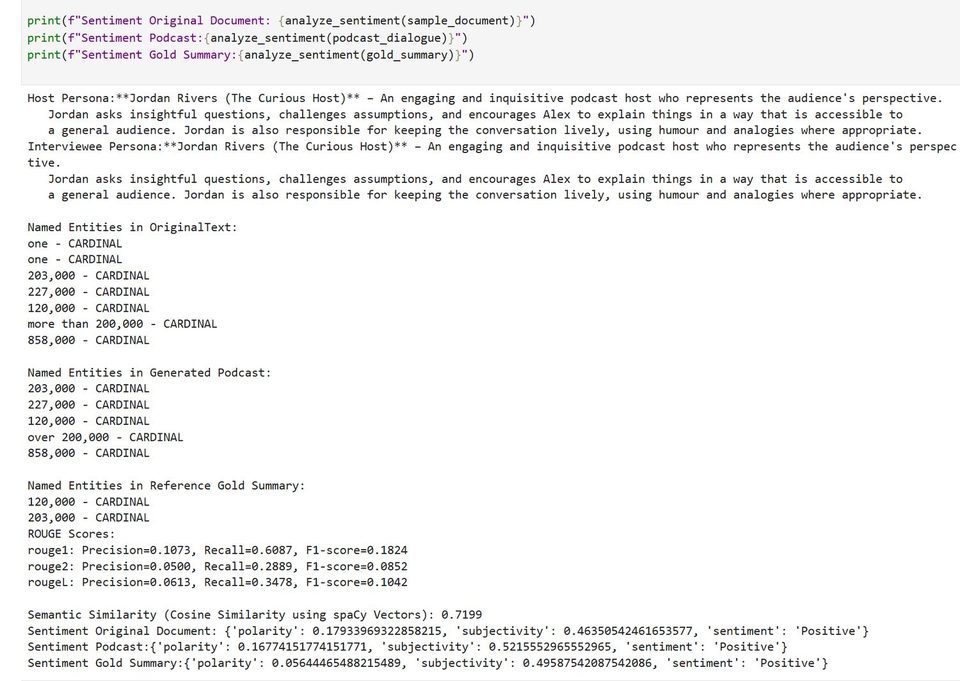
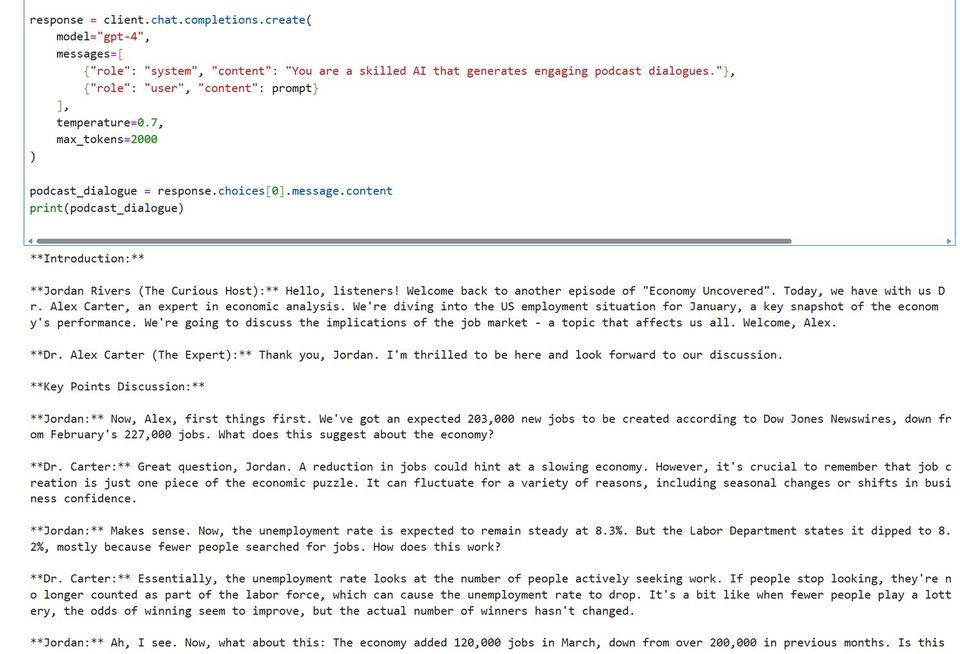
The pilot work looked at generated podcast outputs and scoring approaches for semantic distortion, information filtering and engagement.
Methods
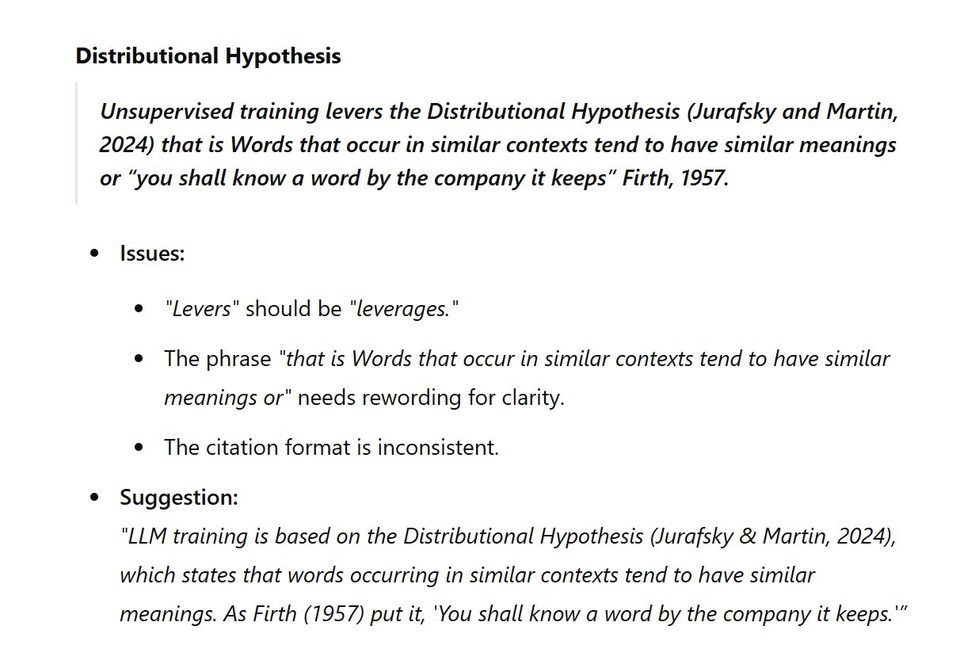
The proposal drew on summarisation research, meeting-minutes literature, prompt engineering and evaluation design.
Lesson
The biggest practical lesson was that “make this more engaging” is not a neutral instruction. It can change what the user believes the source said.
Module scope
The module covered the practical pipeline of text analytics: collecting and preparing text, tokenisation, normalisation, n-grams, vector-space representations, word embeddings, text classification, clustering, information extraction, topic discovery, summarisation and ways of evaluating language systems.
It also connected those foundations to current NLP practice: transformer models, BERT-style contextual representations, large language models, prompt sensitivity, retrieval-augmented systems and the risks of using generated text as if it were a neutral compression of the source.
Pilot weirdness
One pilot prompt asked for a council-meeting podcast in the style of Statler and Waldorf. It was funnier than it had any right to be, and that was the problem: the same source material had turned into a performance, with judgement and selective emphasis baked into the delivery.
That made the research question concrete. Persona choice looks like tone of voice and behaves like an editorial layer.
“Another riveting council meeting to discuss!”
“I’m shaking with excitement... or maybe it’s the bad coffee.”