Assessment
TurtleBot reinforcement learning
I worked with a simulated robot environment, ROS/DDS connectivity, laser-scan state and value-based reinforcement-learning approaches.
OCOM5205M / Robotics
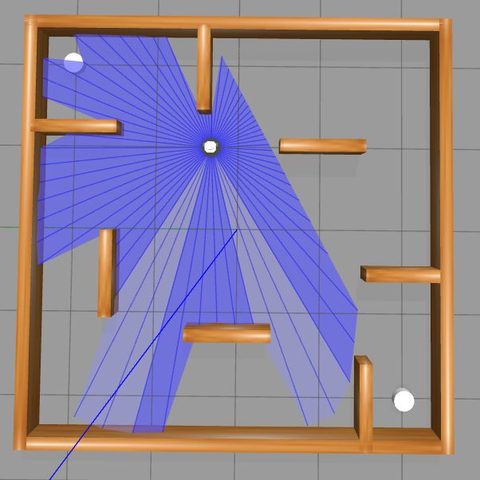
The robotics assessment used ROS, Gazebo and TurtleBot-style simulation to explore reinforcement learning for navigation: state representation, laser-scan features, reward design, action-value methods and the very real pain of simulation plumbing.
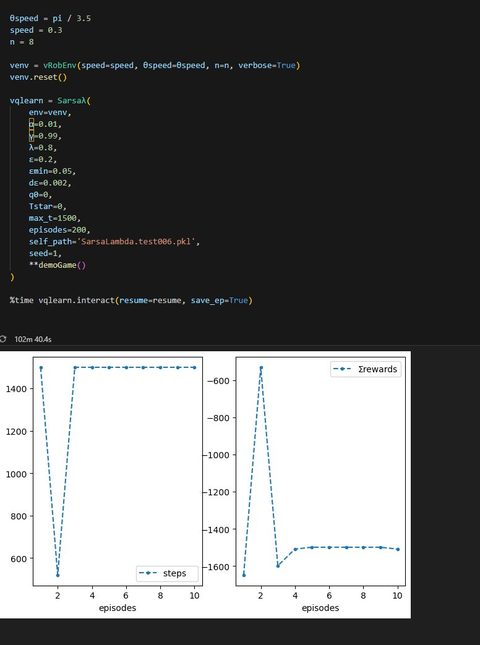
This was the taught module that most obviously fed into the dissertation and into the robot arm in the workshop. It made reinforcement learning feel less like a tidy equation and more like a system with sensors, middleware, state, reward hacks and failure modes.
Assessment
I worked with a simulated robot environment, ROS/DDS connectivity, laser-scan state and value-based reinforcement-learning approaches.
Representation
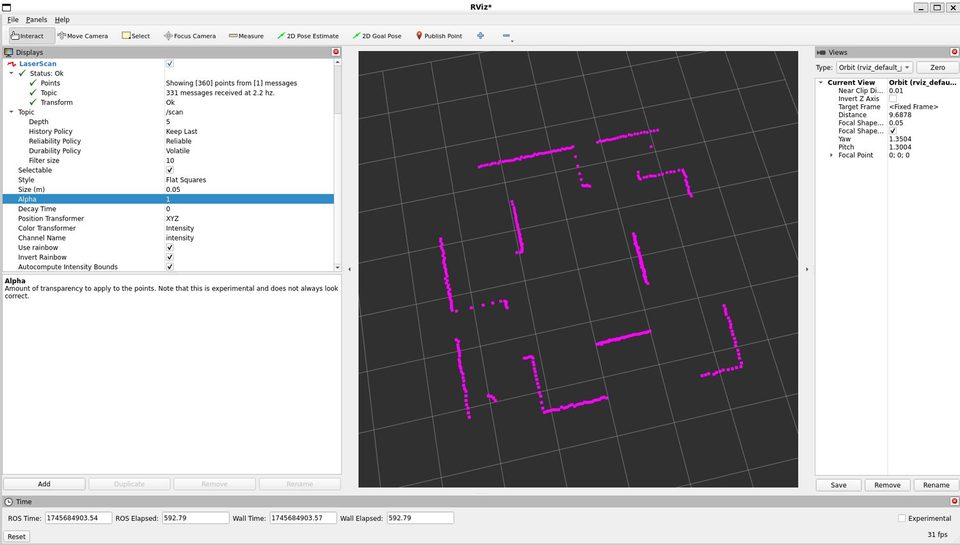
Laser readings had to become usable features. That forced the key robotics question: what does the robot know, and in what form?
Reward
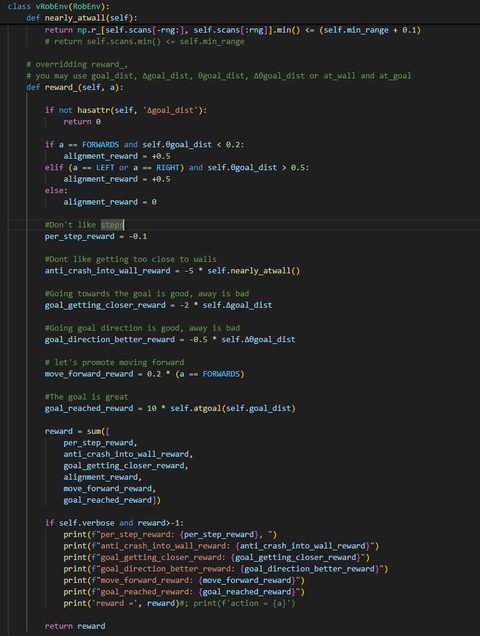
Reward design was a practical lesson in specification: the agent optimises what you reward, not what you quietly hoped it understood.
Lesson
The module made clear how much hidden engineering sits around the learning algorithm: simulation speed, middleware, resets, logging and repeatable experiments.